Your first thoughts on learning you might have lead in your water were likely about protecting your family. The good news is that lead contamination is solvable. Start with immediate steps to reduce exposure today, then move to professional testing and long-term filtration solutions.
Lead is odorless, tasteless and invisible, but you can still address it to restore your peace of mind.
What Should You Do if You Suspect Lead in Your Water?
Here’s what you can do to reduce your family’s exposure while you arrange testing and await a practical long-term solution.
- Stop using tap water: Until you confirm your water is safe, use bottled water or a certified filter for all consumption.
- Flush cold water before use: If you must use tap water, run the cold tap until the water feels cold to clear standing water from your pipes.
- Don’t rely on boiling: Boiling water does not remove lead — it can have the opposite effect by concentrating lead levels.
- Use a certified filter: Point-of-use filters certified for lead removal are an interim protective measure.
Where Does Lead Come From in Drinking Water?
Lead enters water through corrosion of household plumbing materials, not from the municipal water source. The good news is that the problem is solvable at the home level.
Lead Pipes and Service Lines
A lead service line is the pipe connecting your home to the municipal water main, and these pipes are the most significant source of lead contamination. Homes built before 1986 face the highest risk, as lead pipes and lead solder were standard in U.S. plumbing until that year.
The EPA’s 2024 Lead and Copper Rule Improvements require homeowners with lead-containing service lines to replace them within 10 years and tighten the action level from 15 parts per billion to 10 ppb. This national mandate means governments are actively addressing the infrastructure issue.
Faucets, Fixtures and Solder
Homes without service line issues may still experience contamination from brass faucets, chrome-plated fixtures and lead solder used in copper pipe connections, all of which can leach lead into water. The EPA identifies brass or chrome-plated brass faucets as the most common source in homes with newer infrastructure. Lead contamination in water can even affect homes in more recently built communities.
How Dangerous Is Lead in Drinking Water?
The EPA’s maximum contaminant level goal for lead in drinking water is zero. Additionally, there is no safe lead level for children. This heavy metal is particularly dangerous because it accumulates asymptomatically in human bodies, stored in bones alongside calcium.
Infants who primarily consume formula mixed with tap water may get 40% to 60% of their lead exposure from water. In October 2021, the CDC updated the blood lead reference value from 5.0 micrograms per deciliter to 3.5 µg/dL.
Children are most vulnerable to lead’s effects, which can cause:
- Behavior and learning problems
- Lower IQ and difficulty concentrating
- Hyperactivity
- Slowed growth and development
- Hearing problems
- Anemia
Adults face different but serious risks, including increased blood pressure, decreased kidney function and reproductive problems. The danger is particularly acute for pregnant women, whose bones can release stored lead, which can then cross the placental barrier and affect fetal development. Exposure from drinking water is preventable, and quick action will let you avoid multiple potential health complications.
How to Test Your Water for Lead
Since lead is invisible, tasteless and odorless, testing is the only way to know for certain whether it is present in your water. Start by contacting your water utility to learn whether older infrastructure is common in your area. Use a state-certified lab or work with a trusted local water treatment expert who can arrange professional water testing.
Your Long-Term Solution for Lead Water Filtration
The short-term steps are beneficial, but a certified filtration system is the only reliable long-term fix.
What to Look for in a Lead Filter
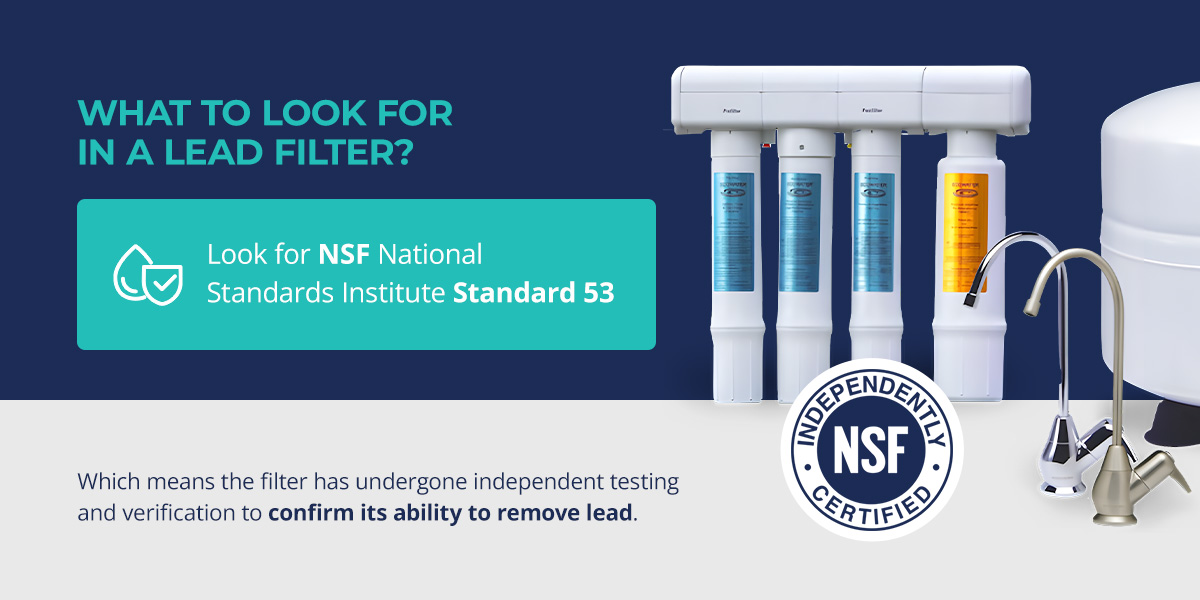
Many filters address taste and odor without removing lead. When selecting certified lead water filtration systems, prioritize third-party certification over brand promises. Look for NSF International/American National Standards Institute Standard 53, which means the filter has undergone independent testing and verification to confirm its ability to remove lead.
High-quality, certified drinking water systems meet or exceed EPA requirements for lead removal, providing independent verification that marketing claims can’t offer.
Point-of-Use vs. Whole-Home Filtration
A drinking water purification system performs focused lead removal where you need it most.
Point-of-use systems, like an under-sink reverse osmosis unit, filter water at the specific tap used for drinking and cooking. These are generally recommended starting points for reducing lead at the tap. Whole-home systems address lead plus other contaminants at the point of entry, which is valuable if you have multiple water quality issues.
Frequently Asked Questions About Lead in Water
Homeowners often ask us these questions when they learn they have lead in their water.
Should I Be Concerned About Lead in Water?
Yes, but proportionately. While lead is a serious health risk with no safe level, especially for children, remember that contamination is detectable and treatable. Concern should translate to action, not panic. Testing, filtration and working with a water treatment expert are appropriate responses.
How Long Does It Take for Lead in Water to Affect You?
Lead contamination is insidious because your body absorbs and stores it in your bones without producing immediately noticeable symptoms. Effects in children can be permanent and disabling, impacting learning, behavior and development. The only way to confirm if lead is in your body is by taking a blood test administered by a healthcare provider.
Is It Safe to Shower in Water That Has Lead?
Yes. Showering and bathing are safe because human skin does not absorb lead in water. The CDC also confirms that bathing and showering pose no risk for adults and children. The danger comes from ingestion only.
How Do You Flush Lead out of Your Body?
Stopping exposure and medical evaluation are vital. In addition, switching to water filtration and a diet high in calcium, iron and vitamin C can reduce your body’s absorption of lead. Frequent medical evaluations are necessary for children with elevated blood lead levels.
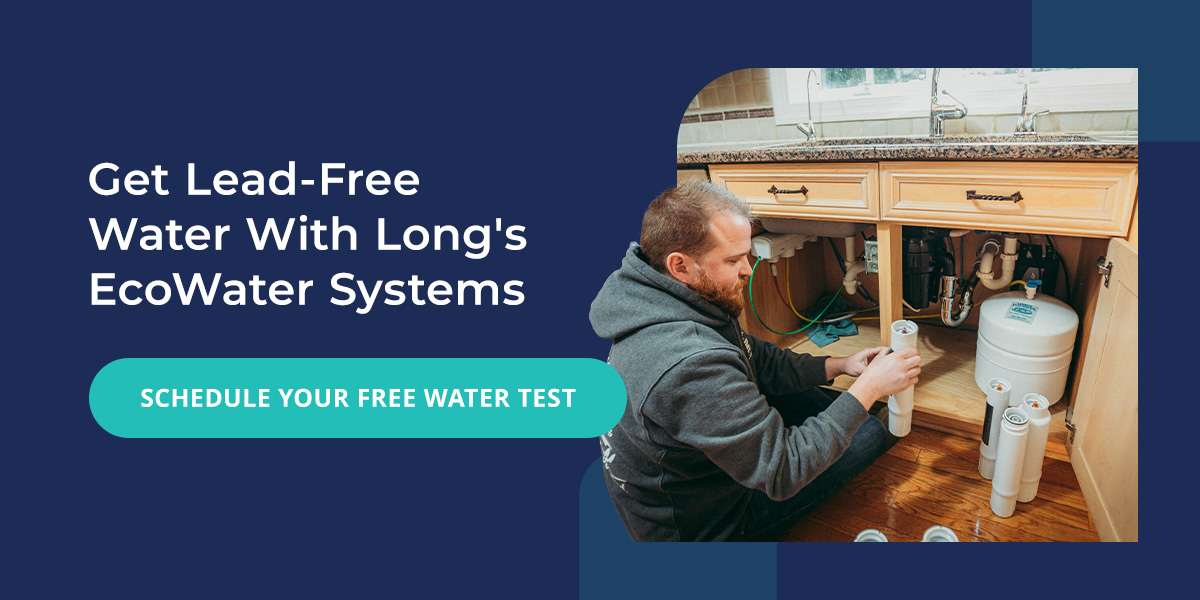
Get Lead-Free Water With Long’s EcoWater Systems
Lead in your water is a serious concern, but its effects are also preventable. Testing confirms what’s in your water, and filtration systems resolve the problem.
Long’s EcoWater Systems has served the Allentown, PA, area since 1949 and remains the exclusive EcoWater dealer in this community. Our trained technicians are water treatment experts, and our U.S.-made drinking water purification systems meet rigorous quality standards. We offer complimentary in-home consultations — the first step toward lead-free water.
Schedule your free water test today and take control of your family’s water quality.