Hard water is one of the most common household water issues, yet many homeowners don’t realize it’s the source of their frustrations. White crust on your faucets, soap scum that never quite disappears and spotted glassware are all telltale signs. The real cost of hard water goes much deeper, affecting your plumbing, appliances, cleaning budget and even your hair and skin. In this guide, we’ll explore these problems in detail and show you the most effective long-term solutions to protect your home.
What Is Hard Water and What Does It Look Like?
Hard water is water that contains high mineral content, specifically elevated levels of calcium and magnesium. They dissolve into your water as it passes through soil and rock and are present in water supplies across most of the United States. The concentration of these minerals varies significantly by region, with some areas experiencing much harder water than others. Though hard water is safe to drink, it creates a host of problems that become increasingly expensive and frustrating over time.
Here are common signs of hard water in your home:
- Cloudy film or spots on dishes and glassware: A white, filmy residue that leaves freshly washed dishes looking dirty.
- Chalky white residue on faucets and showerheads: This limescale buildup is mineral deposits left behind as water evaporates.
- Soap scum buildup on shower doors and tubs: A sticky film that clings to surfaces when hard water reacts with soap.
- Dull, rough-feeling laundry: Clothes and towels lose their softness and may appear dingy or faded.
- Dry, itchy skin and limp, dull hair: The mineral residue left on your skin and hair can strip away natural oils.
What Are the Common Problems Caused by Hard Water?
The visible signs listed above are just the beginning. The common problems caused by hard water extend far beyond cosmetic annoyances, creating real financial costs and potential health concerns that add up over time.
Damage to Your Plumbing and Appliances
The most significant hard-water issue is limescale buildup in your pipes and water-using appliances. Every time hard water flows through your plumbing system, magnesium and calcium deposits accumulate on pipe walls, inside water heaters and within dishwashers and washing machines. This buildup forces water heaters to work harder and consume more energy because it acts as insulation.
In appliances with moving parts, mineral deposits clog valves, spray arms and inlet screens, reducing efficiency and leading to premature failure. The result is higher energy bills, more frequent repairs and a shortened lifespan for expensive appliances. Removing white crust from faucets and showerheads is a visible reminder of the scale buildup happening throughout your plumbing system.
Reductions in the Effectiveness of Cleaning Products
Hard water makes cleaning both harder and more expensive. When calcium and magnesium react with cleaning products, they form an insoluble substance called soap scum that can make it harder to clean effectively. This reduction in effectiveness means you’ll use more cleaning products to achieve comparable results, costing more in the long run.
Negative Effects on Skin and Hair
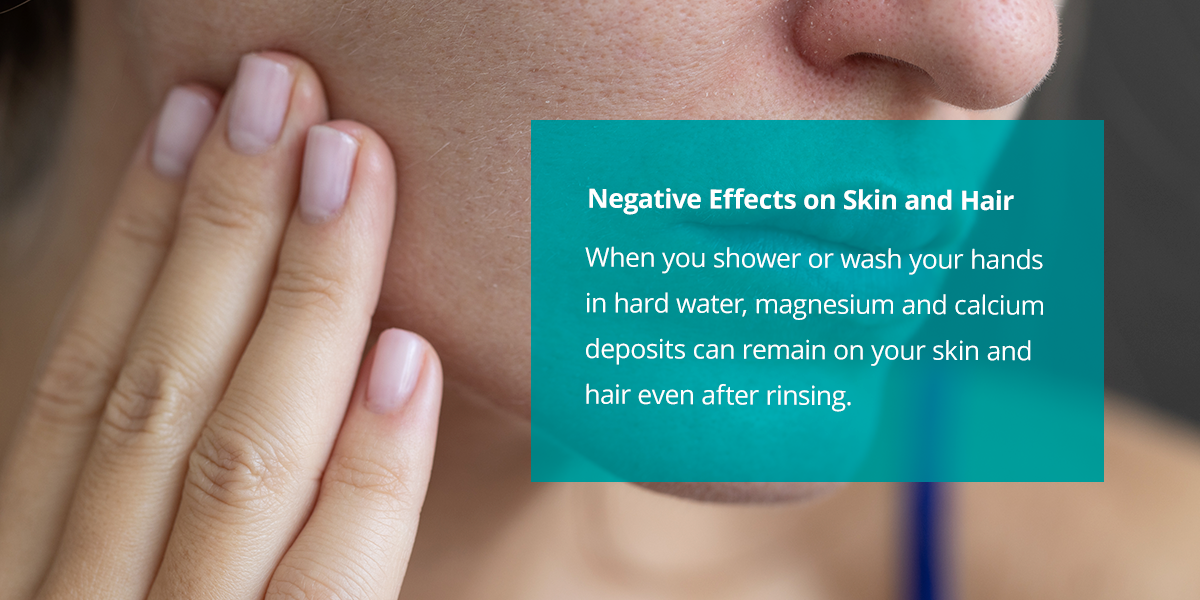
The mineral residue hard water leaves behind can affect you, too. When you shower or wash your hands in hard water, magnesium and calcium deposits can remain on your skin and hair even after rinsing. This residue can clog your pores and disrupt your skin’s natural moisture barrier, potentially leading to dryness, irritation and a tight, uncomfortable feeling.
For people with sensitive skin or preexisting conditions, the effects may be more pronounced. Hard water may trigger or worsen symptoms in people prone to certain skin conditions. Similarly, the mineral buildup on hair can leave it feeling limp, dull and difficult to manage.
How Do You Fix Hard Water?
The most effective solution for hard water is a comprehensive water softening system, but the type depends on your water source. If you have city or public water, a water refiner removes both hardness minerals and the chlorine commonly added to municipal supplies. A water conditioner is the ideal hard water treatment for well water and also removes iron, manganese and sediment.
Both systems use ion exchange, a process that replaces magnesium and calcium with sodium ions. As hard water passes through a tank filled with resin beads, the hardness minerals become trapped while sodium ions are released.
This process helps eliminate the problems hard water causes, resulting in cleaner dishes, softer skin and hair, fluffier laundry and soap that actually lathers. Behind the scenes, your plumbing and appliances are protected from damaging scale buildup, which can help lower energy bills and extend the lifespan of your water heater, dishwasher and washing machine.
Other Water Treatment Solutions
While water softeners address hardness, other water quality issues may require specialized treatment. Depending on your water’s specific characteristics, you may need additional solutions like whole-house water filtration systems to provide cleaner water, such as:
- Drinking water purification systems: Reverse osmosis systems provide point-of-use treatment that helps remove contaminants like PFOA, PFOS, lead, arsenic, nitrates and fluoride, delivering ultra-pure water at your kitchen tap.
- Bacteria and pathogen removal: UV light treatment systems use ultraviolet light to eliminate harmful bacteria, E. coli, viruses and parasites without adding chemicals — an important consideration for homes with well water.
- Iron, sulfur and other contaminants: Specialized filtration addresses specific water problems such as iron staining, sulfur odors, chlorine taste and nitrate contamination, according to your water’s unique chemistry.
How to Get Started
Before investing in any water treatment solution, you need to know exactly what you’re dealing with. The best first step is always a professional water analysis that identifies hardness levels and any other contaminants or issues in your water supply.
Professional testing provides accurate measurements of calcium and magnesium content, along with screening for bacteria, nitrates, iron, chlorine and other common water problems. Armed with this information, you can choose the ideal treatment system for your home.
Get Expert Hard Water Solutions From Long’s EcoWater Systems
Hard water doesn’t have to be a permanent problem in your home. Long’s EcoWater Systems has been solving water quality issues in the Greater Lehigh Valley for over 100 years, earning a 5-star Google rating and the trust of thousands of local homeowners. As the area’s only EcoWater dealer, we offer the most advanced water treatment technology backed by the industry’s most comprehensive warranties.
Our expert technicians will test your water for free and customize a solution that fits your home’s unique needs. Contact us today for a free water test and discover what cleaner, softer water can do for your family.