
You have tried everything. You switched to the sensitive skin body wash, bought dermatologist-recommended lotion and even lowered the temperature of your showers. Yet, you still step out of the bathroom feeling dry, itchy and uncomfortable. If this sounds familiar, the problem might not be the products you are using. It might be the water itself.
Many homeowners overlook water quality as a potential trigger for skin issues. While we often think of water as purely cleansing, the mineral content in your home’s water supply can be an invisible culprit that actively works against your skin’s health. This article explores the science behind how hard water affects your skin barrier and why addressing your water quality, rather than just your symptoms, is essential for achieving lasting relief.
What Is Hard Water and Why Does It Matter?
Hard water has a high concentration of dissolved minerals, primarily calcium and magnesium. According to the United States Geological Survey (USGS), groundwater absorbs these minerals as it passes through soil and rock. Hard water is generally safe to drink — calcium and magnesium are essential nutrients for your body when ingested. However, these minerals behave very differently on the outside of your body than they do on the inside. When used for washing, that same mineral-heavy water can have negative impacts on your skin’s delicate ecosystem.
How Hard Water Damages Your Skin Barrier
When the calcium and magnesium in hard water come into contact with soap or shampoo, they react to form a sticky, insoluble substance commonly known as soap scum. You see it as a stubborn ring around your bathtub or a chalky film on your shower glass. Unfortunately, that same film forms on your skin.
Soap scum does not rinse away easily. Instead, it coats your skin, clogging your pores and preventing your body’s natural oils from reaching the surface. Soap scum also creates a barrier that locks out moisture and traps in bacteria.
The “Squeaky Clean” Myth
People sometimes associate a “squeaky” feeling on their skin with being perfectly clean. In reality, that squeak is a result of the friction caused by the sticky layer of soap scum that the water failed to rinse away. This residue strips your skin of its natural moisture, leading to the tight, dry sensation many people experience after bathing in hard water. Healthy, hydrated skin should feel smooth and supple.
Disrupting the Acid Mantle
Your skin has a natural protective barrier called the acid mantle, which is slightly acidic to fight off harmful bacteria. Hard water is generally alkaline. Constantly washing with alkaline water can disrupt your skin’s pH balance, stripping away this protective acid mantle and leaving your skin vulnerable to irritation and dryness.
Does Hard Water Make Eczema Worse?
Research shows that for people with atopic dermatitis or eczema, hard water is a significant trigger for flare-ups. For instance, a landmark study from the University of Sheffield found that hard water increases the deposition of harsh chemicals from soap, such as sodium lauryl sulfate (SLS), onto the skin. This residue causes further irritation and damage to the protective skin barrier.
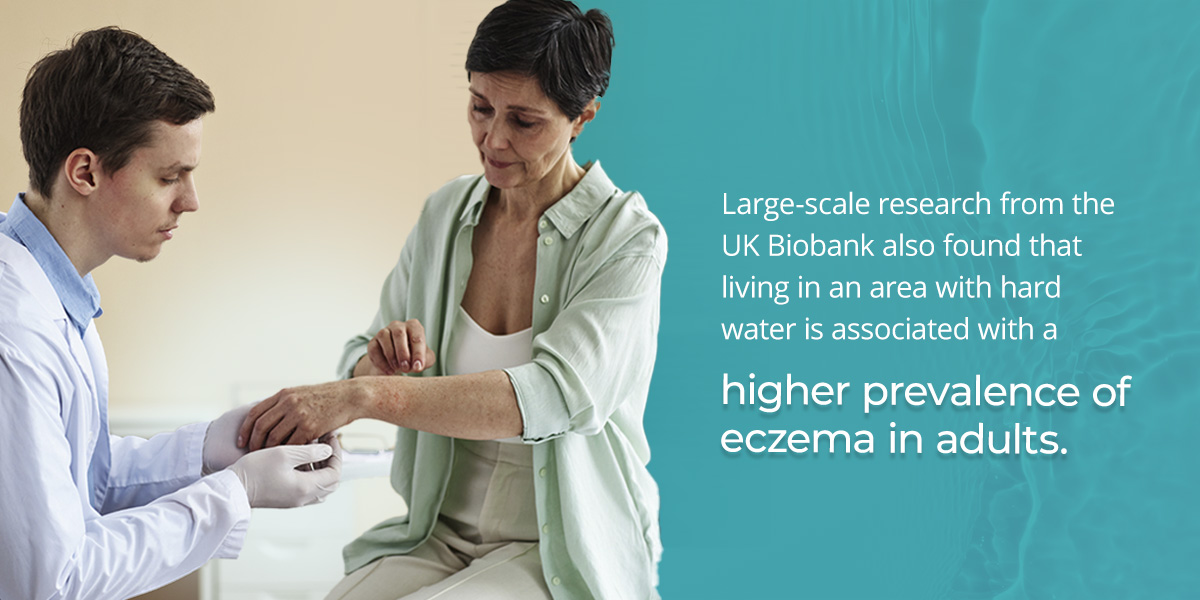
This effect is particularly aggressive for infants and children, whose skin barriers are still developing. Large-scale research from the UK Biobank also found that living in an area with hard water is associated with a higher prevalence of eczema in adults. When the skin barrier is compromised, it creates a cycle of irritation. The skin becomes dry and itchy, leading to scratching, which further damages the barrier and allows more irritants to enter. This cycle makes effective eczema management nearly impossible without addressing the water itself.
Other Common Hard Water Skin Problems
Beyond general dryness and eczema, the minerals in hard water can lead to other frustrating and persistent skin issues:
- Premature aging: The minerals in hard water can generate free radicals, which may break down collagen. For our skin, collagen is what keeps it firm and elastic. Over time, this degradation can lead to the appearance of fine lines and premature aging.
- Acne and breakouts: Besides blocking moisture, the soap scum left on your skin traps oil and bacteria. This combination is a perfect recipe for clogged pores, leading to persistent pimples and breakouts even in adults who thought their acne years were behind them.
- Scalp issues: The skin on your head is just as vulnerable as the skin on your face. Hard water often causes a dry, itchy scalp and dandruff-like flaking. It can also make hair feel heavy, straw-like or challenging to manage because the minerals build up on the hair shaft.
Signs Your Water Might Be the Problem
You don’t have to guess whether your water is the hidden source of your skin and hair frustrations. Your home and body provide clues every day, including:
- Dry skin: Your skin feels tight, dry or itchy immediately after showering.
- Straw-like hair: Your hair is difficult to manage, feels weighed down, looks dull, or feels frizzy and brittle, no matter which conditioners you use.
- Resistant acne: You experience breakouts that don’t seem to respond to consistent skincare treatments.
- Visible scale buildup: You notice white, chalky residue on your faucets, showerheads and glass shower doors that is difficult to clean.
- Faded laundry: Your clothes, sheets and towels feel stiff and scratchy and lose their color quickly.
How a Water Softener Improves Skin Health
The most effective way to protect your skin from hard water is to remove the minerals before they reach your skin. A water softener works through a process called ion exchange. As water passes through the system’s resin tank, the hard calcium and magnesium ions are captured and replaced with sodium ions.
The difference in shower quality is often immediate. Soft water allows soap to lather richly and, more importantly, rinse away thoroughly. Without the interference of calcium, there is no soap scum reaction. You are left with no sticky residue, no clogged pores and no friction-causing film. Soft water also offers other benefits, including:
- Restored skin hydration and a reduction in dryness and itchiness.
- A decreased need for heavy moisturizers and expensive eczema creams.
- Softer, shinier, more manageable hair.
Take the First Step Toward Softer, Healthier Skin

No amount of lotion can fix dry skin problems if you continue to wash your skin with hard water. If you suspect your water is affecting your quality of life, the first step is to get a confirmed diagnosis of your water quality.
For over 70 years, Long’s EcoWater Systems has been the trusted local expert in diagnosing and treating the specific hard water problems found in Eastern Pennsylvania. We can help you understand precisely what is in your water and verify if hardness is contributing to your skin concerns. For families with sensitive skin, we often recommend the EcoWater Refiner. While standard softeners remove hardness minerals, the Refiner also removes chlorine, which is another common irritant that can dry out skin and hair.
Contact Long’s EcoWater Systems to schedule a complimentary in-home water analysis. Our certified technicians will help you identify what is in your water and design a customized solution to protect your family’s skin health for good.