
Lead poses an invisible threat in drinking water – you can’t see, smell or taste it. This harmful metal often enters your water from aging pipes, plumbing and service lines, especially in older homes with decades-old lead-based solder or fixtures.
The health impacts of lead are serious, particularly for children and pregnant people, making it crucial not to overlook this danger. If you’re concerned about lead but feel lost about where to begin, you’re not alone.
Many families are overwhelmed by the conflicting information surrounding water filters and testing. The good news is that safeguarding your family involves two proven methods — professional water testing for lead and filtration systems certified to meet standards from the Environmental Protection Agency (EPA).
This guide will show you which certified systems can be effective for families and why professional testing offers the clarity and assurance you seek.
Certified Lead Water Filtration Systems
It’s important to know that not all water filters address lead. Many improve taste or reduce odor without targeting harmful contaminants, which is why certification is often more reliable than marketing claims.
Independent testing verifies the effectiveness of lead removal from drinking water and other health-affecting contaminants. For families seeking effective drinking water purification, certified systems come in two main types:
- Point-of-use (POU) systems: These filters treat water at a single tap, usually for drinking and cooking.
- Point-of-entry (POE) systems: These systems treat water throughout the household as it enters your home.
The key is selecting a system that’s tested and certified to meet the EPA’s lead removal standards.
Many of these certified systems can also reduce other contaminants that impact water quality and taste, giving parents greater assurance about their household water.
POU Water Filters
POU systems, such as under-sink reverse osmosis (RO) filters, deliver purified water directly from a dedicated faucet. These systems are ideal for families who need to remove lead from tap water for drinking and cooking right at the kitchen tap.
RO works by pushing water through a semipermeable membrane that significantly reduces lead, dissolved solids and many other harmful substances. Most homeowners choose to install POU systems discreetly under their kitchen sink.
This convenient placement provides filtered water on demand, out of sight. POU systems are particularly beneficial for families focused on the safety of their drinking water and food preparation.
Benefits of certified POU drinking water systems for your family include:
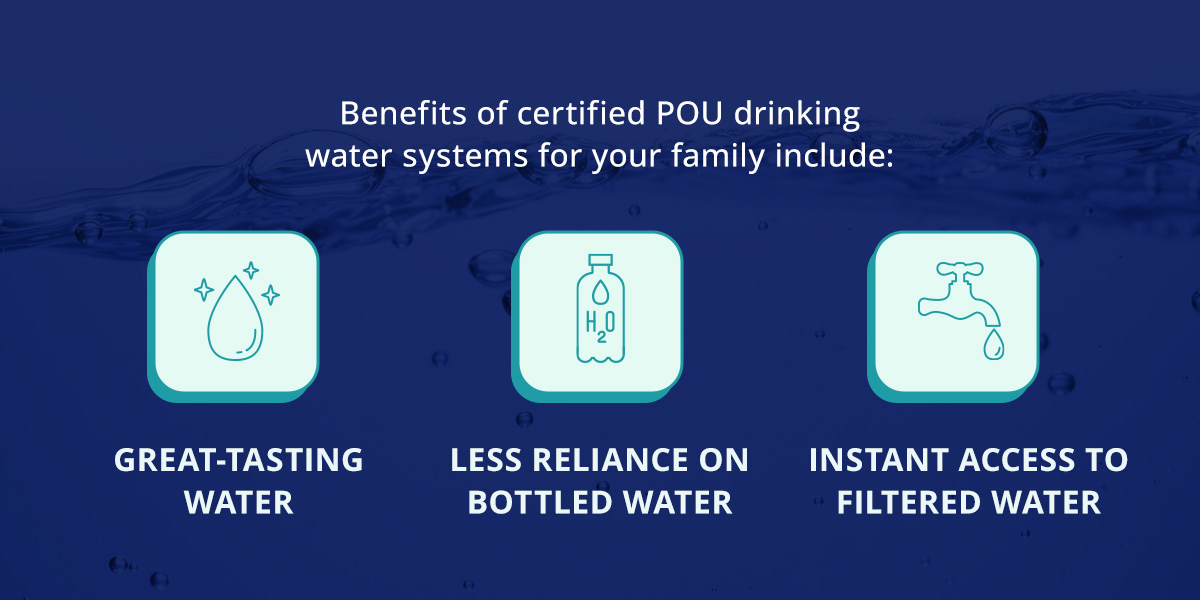
- Great-tasting water: RO removes chlorine, sediment and other elements that affect water flavor, noticeably improving your coffee, tea and cooking.
- Less reliance on bottled water: A certified system can reduce the need to buy and store plastic bottles, saving money and reducing waste for active households.
- Instant access to filtered water: Safe drinking water is readily available when your family needs it, without the wait for pitcher filters or trips to the store.
Whole Home Water Filtration Systems
Whole-home filtration systems treat water entering your home before it flows through your plumbing. These POE systems address water quality right at the source, whether you have a municipal water utility system or well water.
Many families choose to combine whole-home filtration with a dedicated reverse osmosis drinking system for comprehensive water protection.
A whole-home water filtration system offers several advantages:
- Consistent water quality: Filtered water can flow from every connected tap and fixture, giving your family cleaner water for washing, bathing and all household tasks.
- Appliance longevity: By reducing sediment and mineral buildup, these systems help protect appliances like water heaters, washing machines and dishwashers, potentially extending their lifespan and saving you money.
- Comprehensive treatment: Pairing a whole-home system with an RO drinking system allows for targeted water treatment. Whole-home filters address general water quality, while RO focuses specifically on the purity of your family’s drinking water.
How to Identify NSF Certified Filters
NSF certification is a leading standard for water filtration systems. NSF International is an independent body that tests and certifies products, confirming they meet strict public health standards.
This certification helps families navigate confusing marketing claims, ensuring they choose systems that genuinely perform as advertised. Manufacturers can make many promises, but independent testing provides strong evidence of a product’s effectiveness.
NSF testing evaluates systems under consistent conditions, verifying that a product removes the specific contaminants listed on its certification and providing assurance that a filter delivers on its promises.
The EPA also offers guidance on water filter certification, assisting consumers in finding filters that meet its standards.
Steps to Verify NSF Certification
While product packaging should feature NSF certification marks, it’s wise to look beyond initial claims. Search for specifics that clearly indicate what a system is certified to remove.
Key certifications to confirm:
- NSF/ANSI Standard 53: This standard covers health-related contaminant reduction, including lead. Systems with this certification have been tested to remove contaminants posing health risks.
- NSF/ANSI Standard 58: This standard applies specifically to RO systems, confirming they meet performance requirements for contaminant reduction.
- Check the database: Visit the official NSF database to check a product’s certification online and see precisely which contaminants a system removes.
- Confirm lead removal: Ensure “lead” is explicitly listed in the certification details. General claims about “improved water quality” typically do not guarantee the lead removal your family requires.
Why Professional Water Testing for Lead Is Essential
Lead levels can differ greatly from house to house — your neighbor’s water quality may not reflect your own. Professional lead water testing offers reliable results, removing guesswork when your family’s health is a priority.
Testing shows precisely what’s in your water, helping you choose the correct solution. Here’s why professional testing offers such clarity:
- Accurate results: Unlike DIY kits, professional lab testing generally provides greater accuracy. Labs use standardized methods to detect even very low lead levels that home kits might miss.
- Expert interpretation: Professional testing includes clear explanations of your results, so you can see which contaminants are present and at what concentrations.
- Personalized recommendations: Your test results guide the selection of the most suitable filtration solution for your home’s unique water conditions.
Pennsylvania residents can consult the state’s Department of Environmental Protection (DEP) for state-specific lead information. The DEP advises annual well water testing.
Enlisting professional water testing services provides precise results and expert advice, confirming if lead removal is necessary and recommending the most suitable system for your family.
Find Your Custom Solution With Long’s EcoWater
Every home’s water is unique, and professional recommendations should stem from actual test results, not assumptions. Long’s EcoWater Systems is the Lehigh Valley’s only authorized EcoWater Dealer, bringing decades of experience to local families.
We deeply understand regional water concerns and offer certified systems designed to provide the clean, safe water your family deserves.
Worried about lead or other water quality issues? Our team can test your water and suggest the most suitable solution for your home. Safeguard your family with certified filtration that delivers healthier, purer water.
Reach out to us online for a free water test today or call us at 610-991-7597 to take the first step toward better water quality.