You’ve rewashed the same load of dishes three times, and they still have that cloudy film. Your towels feel like sandpaper, no matter how much fabric softener you use. Your skin is dry and itchy, even though you just stepped out of the shower.
Sound familiar? You’re not alone. Hard water affects many homes across Eastern Pennsylvania, silently costing homeowners money while they deal with daily frustrations.
Here’s the good news — installing a water softener system doesn’t have to break the bank. In fact, the savings can eventually pay for the system itself.
The Hidden Costs of Hard Water
Those hard water annoyances you deal with every day aren’t just frustrating — they’re costing you real money. Hard water is a common problem in Pennsylvania, where mineral deposits such as calcium, magnesium, iron or manganese accumulate.
Without a water softening system, you’re paying these hidden costs:
- Appliance damage: Scale buildup clogs pipes and forces dishwashers, washing machines and water heaters to work harder, leading to premature failure and costly replacements.
- Higher energy bills: Your water heater uses significantly more energy to heat water through layers of mineral buildup, driving up monthly utility costs.
- Wasted household products: You use two to three times more soap, shampoo, detergent and dish soap. Hard water minerals prevent proper lathering.
How Hard Water Damages Home Appliances
Limescale buildup from hard water accumulates inside appliances and plumbing, creating a crusty layer that restricts water flow and forces motors to work overtime.
Your dishwasher has to run longer cycles. Your washing machine struggles to rinse properly. Your coffee maker clogs and slows down. Over time, this constant strain shortens the lifespan of every water-using appliance in your home.
Softened water preserves appliance efficiency and extends their working life by years, preventing damage from hard water that may cost hundreds in repairs and replacements.
The Impact of Scale Buildup on Energy Bills
Your water heater is most affected by hard water. Scale buildup acts like an insulating blanket inside the tank, sitting between the heating element and the water.
As a result, the heater runs longer and hotter to bring water to the desired temperature, using significantly more energy every single day.
Why You’re Using More Soap and Detergent
Hard water minerals bind to soap molecules, forming soap scum instead of creating a rich lather. To compensate, you use extra shampoo, more laundry detergent and additional dish soap just to get things marginally clean.
A typical family can spend hundreds of extra dollars per year on cleaning products alone, simply because their water isn’t performing effectively. Recognizing the common signs of hard water is the first step toward stopping the waste.
Water Softener Cost vs. Savings Breakdown
Let’s talk numbers. A water softener represents a significant investment, making a clear understanding of the cost versus savings breakdown crucial. Transparency about your potential expenses helps you make an informed decision.
When shopping for water softener systems, you’ll encounter three main cost components:
- Equipment cost: The water softener unit itself will have an up-front cost, with variations based on capacity, efficiency and features.
- Installation cost: Professional setup ensures the system runs efficiently, protects your warranty and meets local plumbing codes.
- Ongoing maintenance: Salt refills and occasional servicing are needed to keep your system operating at peak performance.
The average cost of a complete installed system depends on your home’s specific needs and the system you choose.
Money-Saving Water Softening Systems
The unit itself is your biggest up front expense. Systems are available for homeowners with different budgets. High-efficiency models typically cost more. However, they often use less salt and water over time, which can offset the higher initial price.
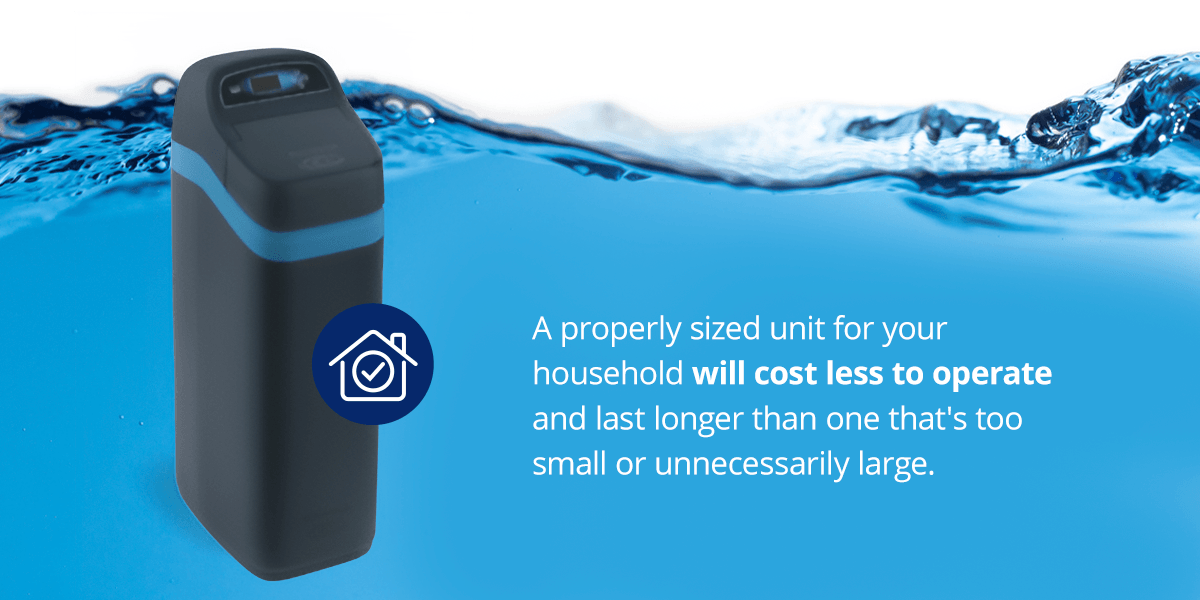
When choosing a water softener system, capacity matters significantly. A properly sized unit for your household will cost less to operate and last longer than one that’s too small or unnecessarily large.

Professional Installation vs. DIY
Professional installation costs vary depending on your home’s plumbing complexity and whether additional work, like adding a drain line or upgrading pipes, is needed.
A professionally installed system runs more efficiently from day one, typically comes with a warranty and meets local plumbing codes. Most importantly, you avoid the costly mistakes that can arise from improper installation.
Ongoing Maintenance and Salt Expenses
Water softener salt is your primary ongoing cost. Here’s what to expect and how to manage these expenses:
- Monthly salt costs: Salt costs may vary by water hardness and household size.
- High-efficiency advantages: Modern high-efficiency systems can reduce salt consumption, sometimes cutting usage by half compared to older models.
- Proper calibration matters: Calibrating an efficient system makes a real difference in salt usage and performance.
- Long-term savings potential: Over your softener’s lifespan, reduced salt usage can save you hundreds of dollars and is better for the environment.
Calculating Your Water Softener ROI
Here’s where budget-friendly water treatment solutions prove their value. When you compare your current losses from hard water against the cost of a softener, the math often favors installation. A water savings calculator can help you estimate your household’s actual savings based on your water hardness level, family size and current spending.
Softened water means your appliances operate efficiently again, and your water heater stops fighting through mineral deposits, cutting energy costs. Your dishwasher and washing machine last years longer, delaying expensive replacements. Soft water lathers easily, so you use far less of everything. Shampoo bottles last twice as long. You cut your laundry detergent usage. These savings add up fast.
Example Savings Calculation
Let’s consider a hypothetical example for a family of four with moderately hard water:
- Annual energy savings: $400 (from reduced water heater energy use and longer appliance life)
- Annual detergent and soap savings: $300 (from less product needed for cleaning, laundry, bathing)
- Annual salt cost: $300 (ongoing expense)
- Net annual savings: $400
If the total system cost was $2,400, this family would break even in six years. After that, they’ll save $400 every year while enjoying softer skin, cleaner dishes and better-performing appliances.
Choosing the Right Size for Your Home
Don’t overspend on capacity you don’t need, and don’t underspend on a system that can’t keep up with your household demand. Getting the right size water softener makes all the difference in performance and long-term costs.
Water softener capacity is measured in grains, referring to the number of hardness minerals the system can remove before it needs to regenerate. The right size depends on your water’s hardness level and your household’s daily water usage.
A professional water test provides accurate numbers for both, eliminating guesswork. One size doesn’t fit all because everyone’s water is different.
Get Your Free Custom Savings Analysis
The best way to know exactly how much a water softener will save your household is to start with a professional water test. Long’s EcoWater Systems offers a free in-home water analysis and consultation with no obligation. We’ll test your water, assess your family’s needs and provide a custom cost-benefit breakdown based on your actual water hardness and usage.
Since 1949, we’ve been the Greater Lehigh Valley’s trusted water treatment experts. We customize solutions to fit your home and budget, providing affordable water softener systems in PA. Contact our friendly team today to schedule your free analysis and take the first step toward softer water and real savings.